
It is late morning just around Hammersmith Terrace at the banks of the river Thames. A harron and some seagulls are engaging in their morning routine next to the ebb tide line. The thin blanket of clouds is suggesting a promising day.
(All images are subject to copyright)
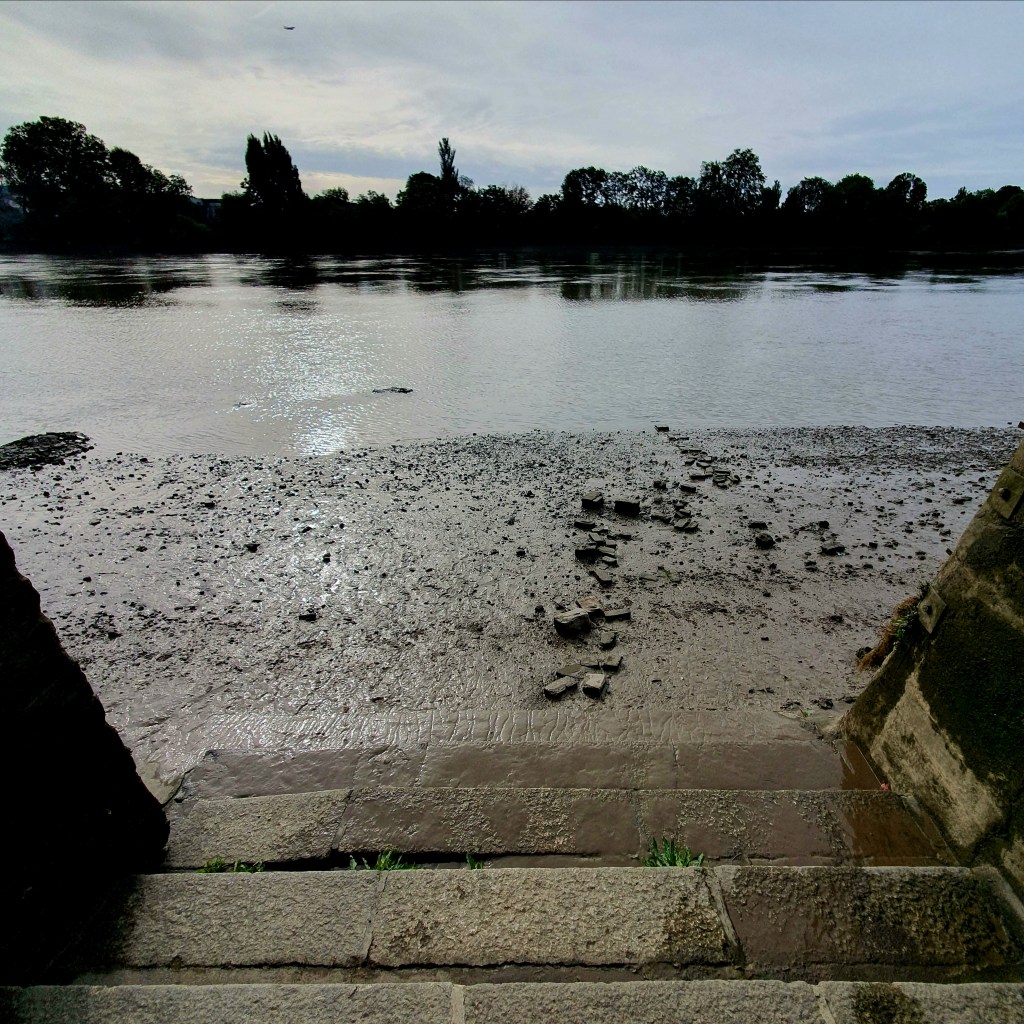
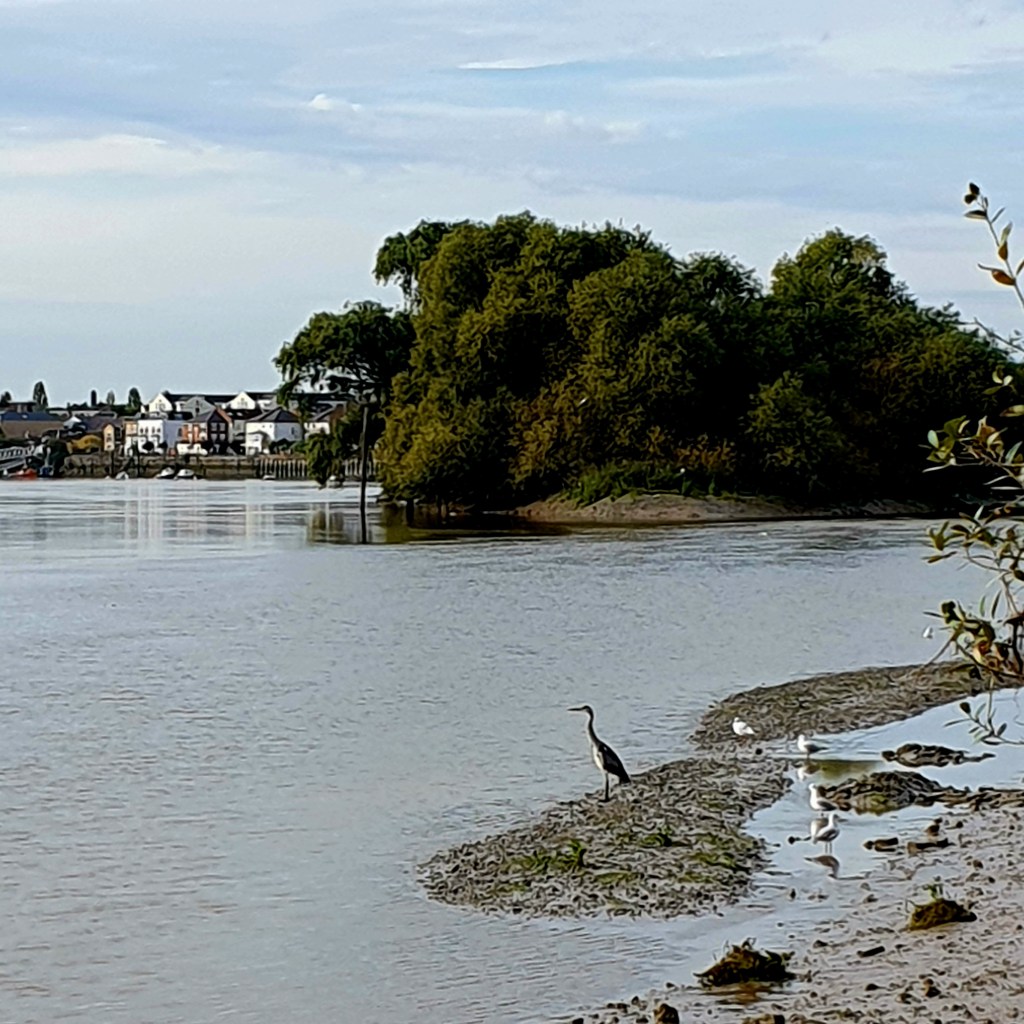
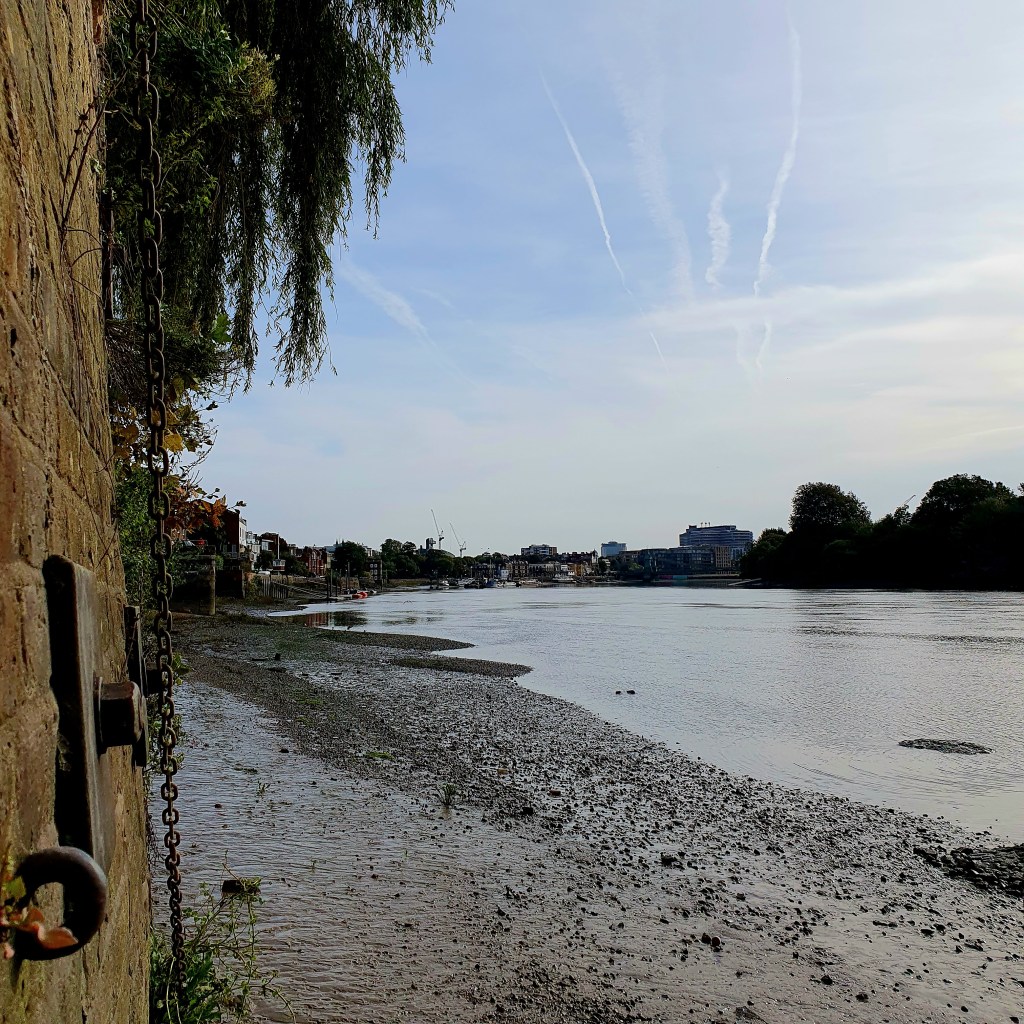
We are in Hammersmith, London. And when transferring thoughts into words, I am already sitting outside the Elder Press Café on a metal chair in the morning sun – heavily inspired.
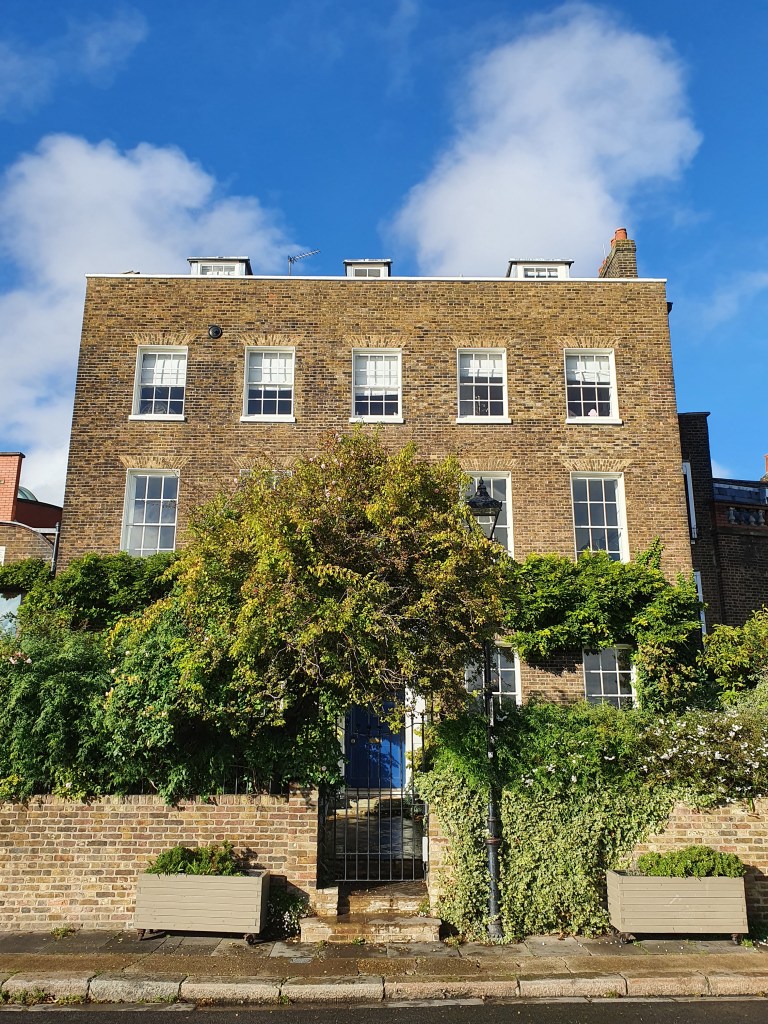
Only a few meters away, and just in my eyesight, sits a sturdy group of Georgian terraced houses, one of which, namely No. 7 (built around 1755), is a stunning example of Arts and Crafts Interior. What you’ll find here is a well preserved time capsule that withstood the course of time. It was home to (Sir) Emery Walker and his family. As one of the involved contemporaries within the Arts and Crafts Movement in England at the end of the 19th century, Walker had a background in a working class family and had to start earning money at the age of 13. Not discouraged by this obstacle, he continuously managed to self-educate. After being apprenticed to a linen draper, he joined a Typographic Etching Company, then became an engraver, a photographer and later set up the Doves Press in a partnership with a bookbinder. Walker was a friend of William Morris who lived for little more than a decade only a stone’s throw away at Kelmscott House. Another member of their clique was the Arts and Crafts designer and architect Philip Webb.
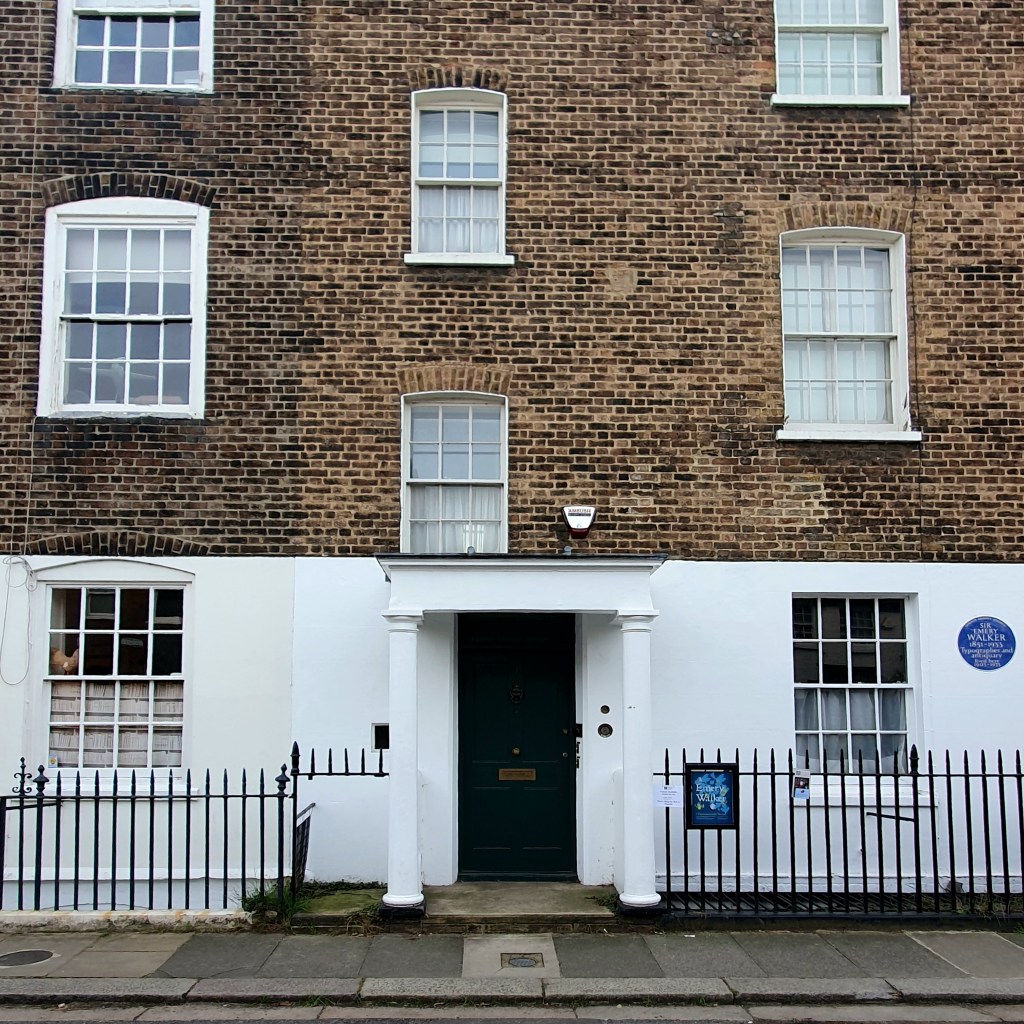
When entering Emery Walker’s House, it feels like going back in time, stepping into a family home of an era long gone. It comes with no surprise that one finds the house not only filled with Arts and Crafts Interior Design but also with mementos as a testimony to their friendship. Having been inside the house almost a year ago, it inspired me to do a slightly altered watercolour painting of the dining room. Among other things it features Morris & Co’s Willow wallpaper, handblocked and with a special bubble effect in the background which you potentially won’t find anywhere else. It also features a photography of William Morris hanging over the mantelpiece, as well as a painting of Philip Webb’s cottage in the countryside, William Morris’s 17th Century library chair from Kelmscott House, which in reality also has a May Morris (daughter of William) tapistry cover lying on it, which was a gift from May to Emery after Williams death. The room also features a Morris & Co’s Bird pattern hanging and a brass dish (potentially 16th century) that might have belonged to Philip Webb, like other items in the room.

(Watercolour on paper)
All three of them were members of the Society for the Protection of Ancient Buildings (SPAB) – a society founded by Morris, Webb and others in 1877. And on that note we shall venture to the countryside.
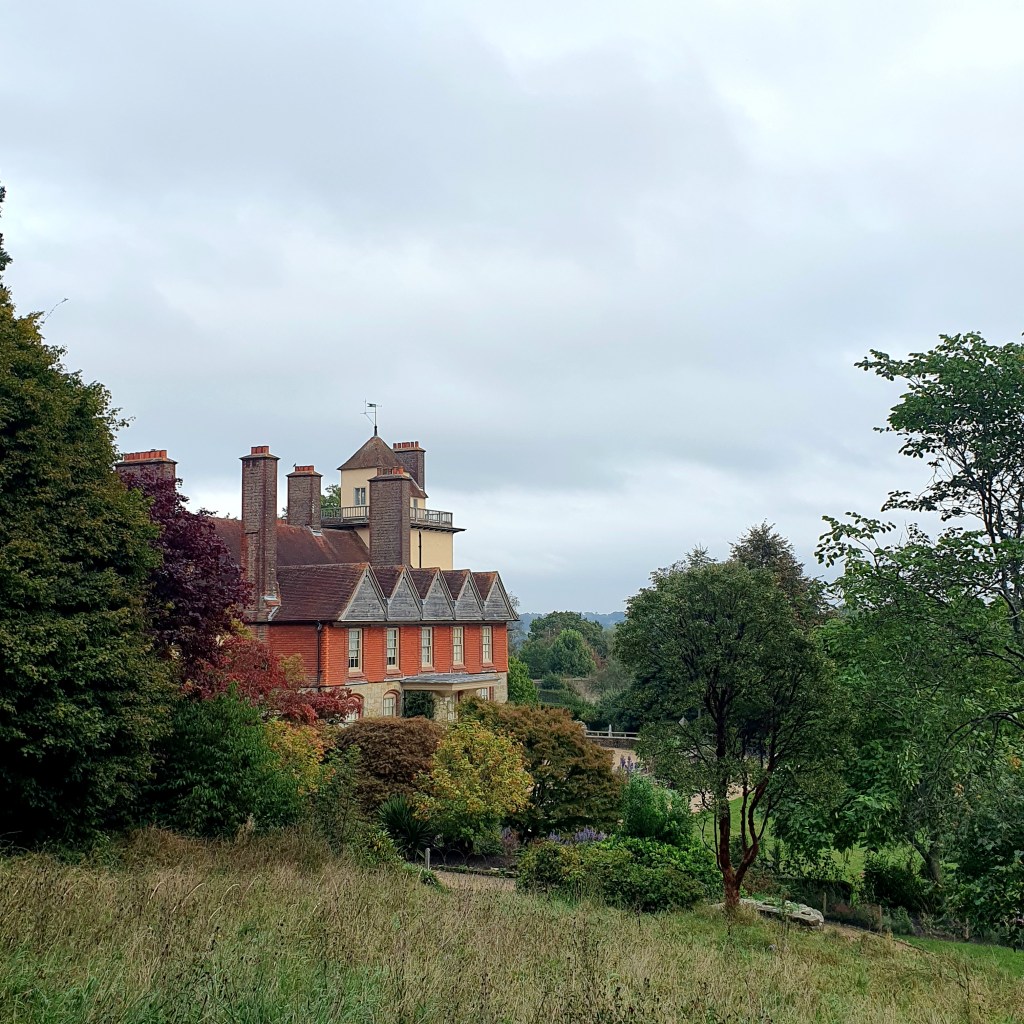
We are travelling to the outer edges of East Grinstead in West Sussex. Here stands proudly a stunning example of an Arts and Crafts House overlooking the beautiful and rural countryside with its rolling hills, woodlands and meadows.
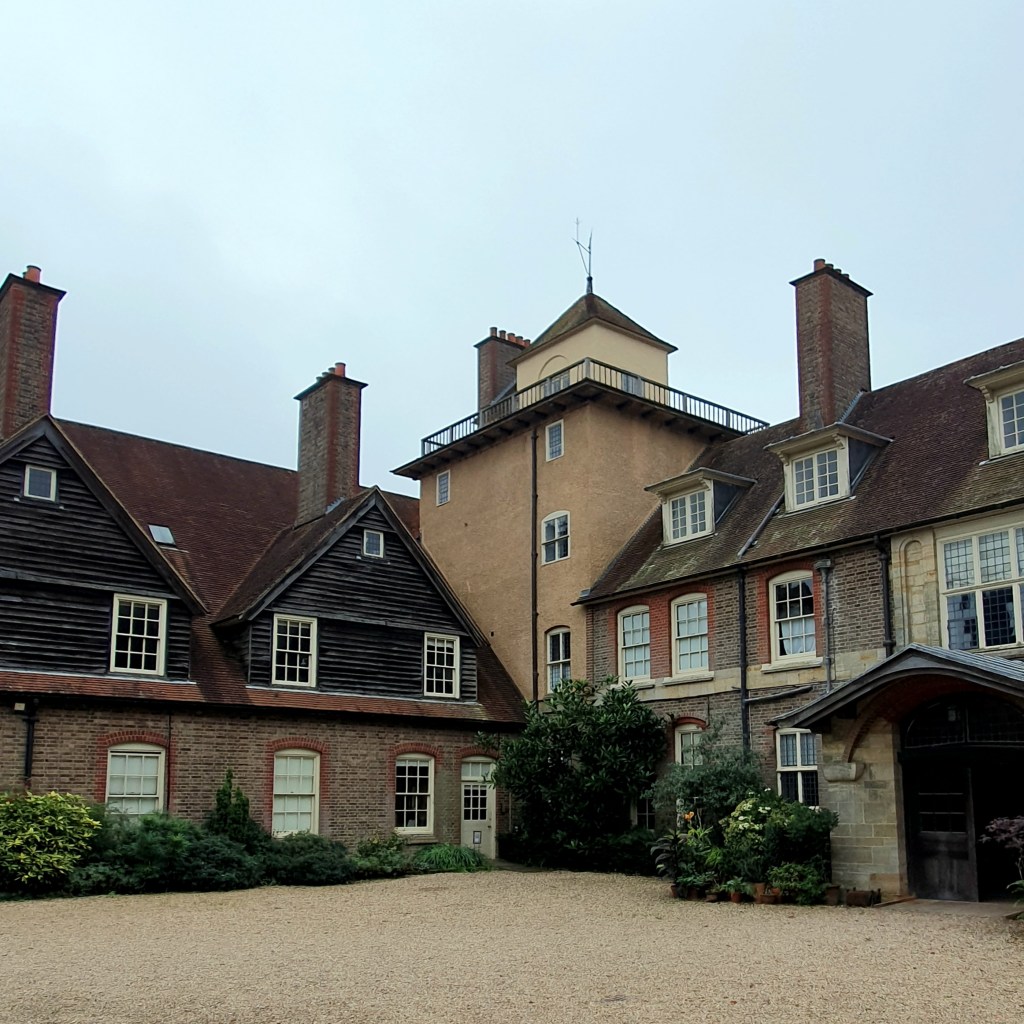
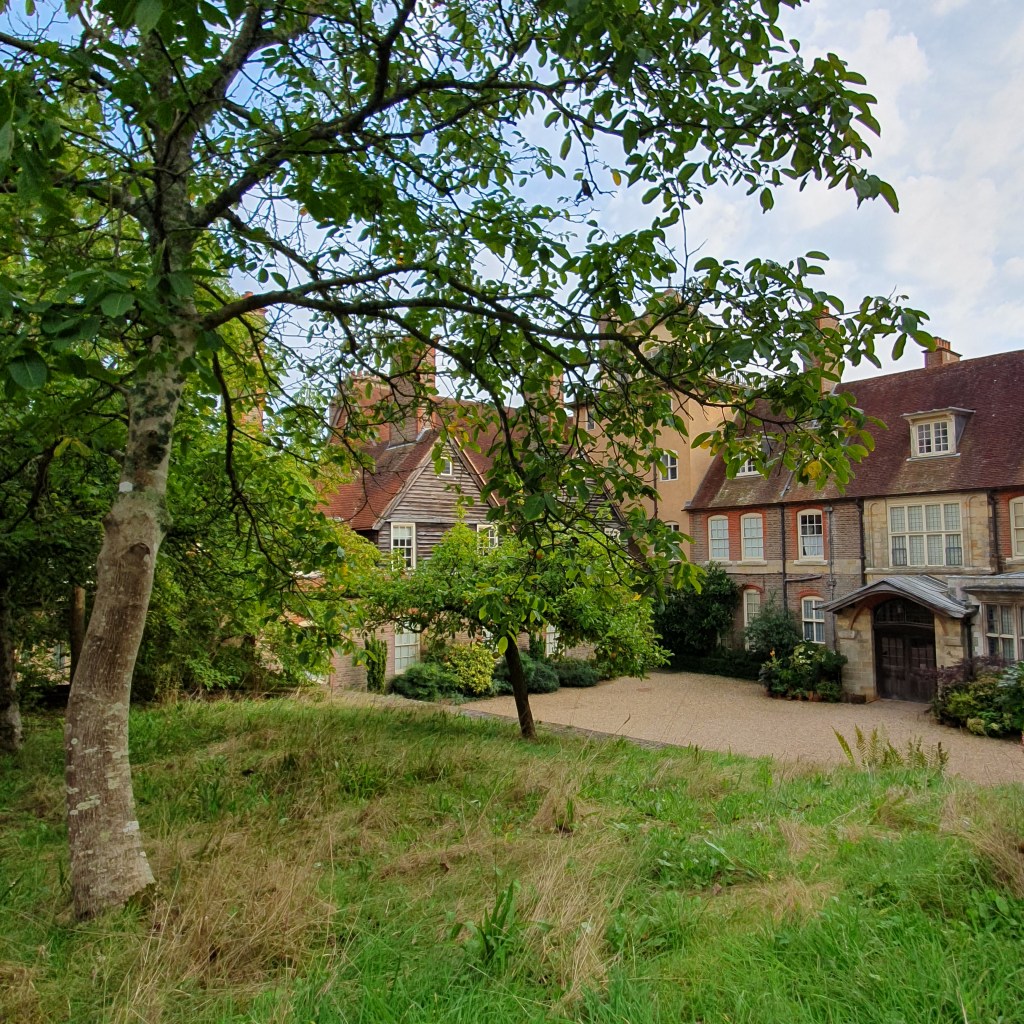
It is a work of Philip Webb and combined beautifully with Morris & Co. Interiors. The usage of local materials and traditional construction methods stood in the foreground – a mindset of the Arts and Crafts Movement and, unfortunately, something most people have forgotten about in today’s times.
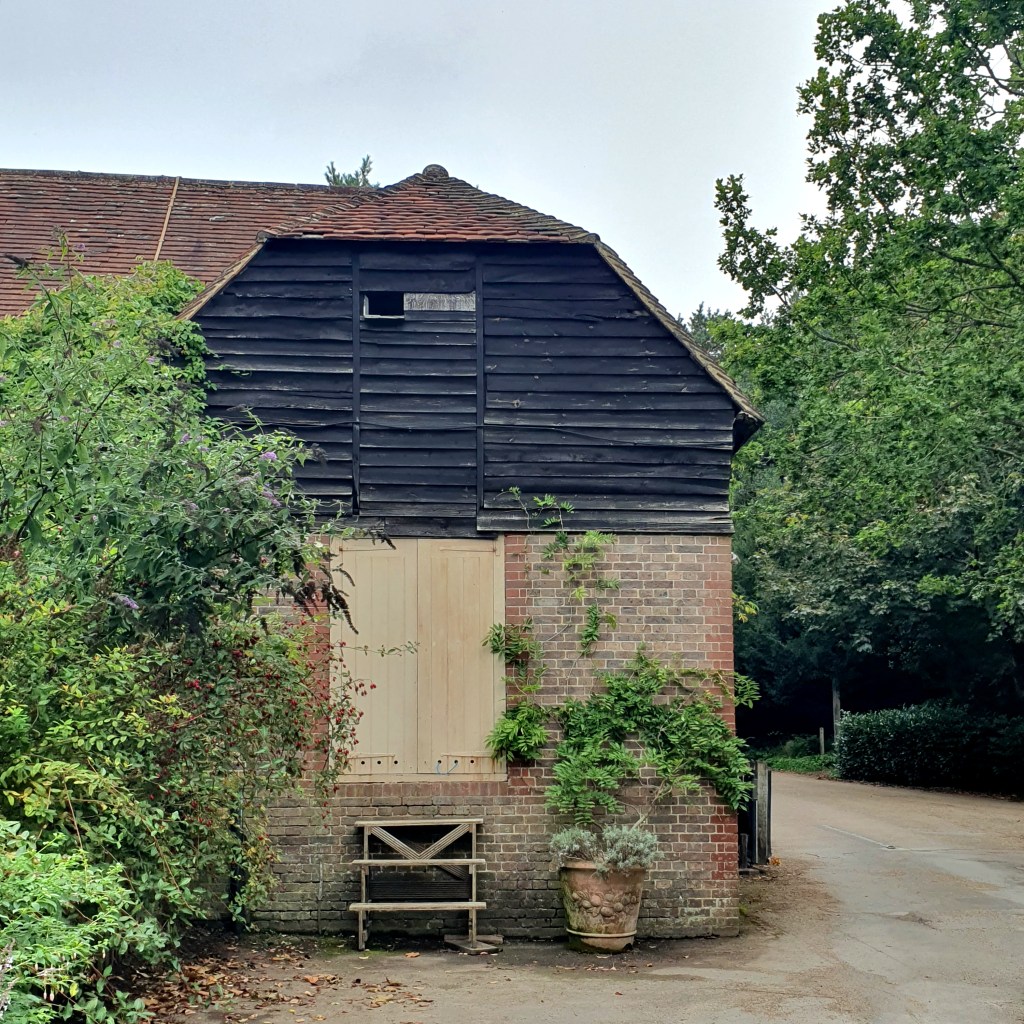
A part of Webb’s design was the incorporation of some medieval farm buildings. An aspect which creates the most interesting architectural sceneries, especially for admirers of architecture with a somewhat romantic sentiment and interest in the Arts and Crafts Movement. (Another example in that regard is, for instance, Great Dixter in East Sussex by the architect Edwin Lutyens.) However, it is in fact the farm building and a barn you will encounter first at your arrival – not the estate. This was a planning decision: to make the places of work visible instead of hiding them.
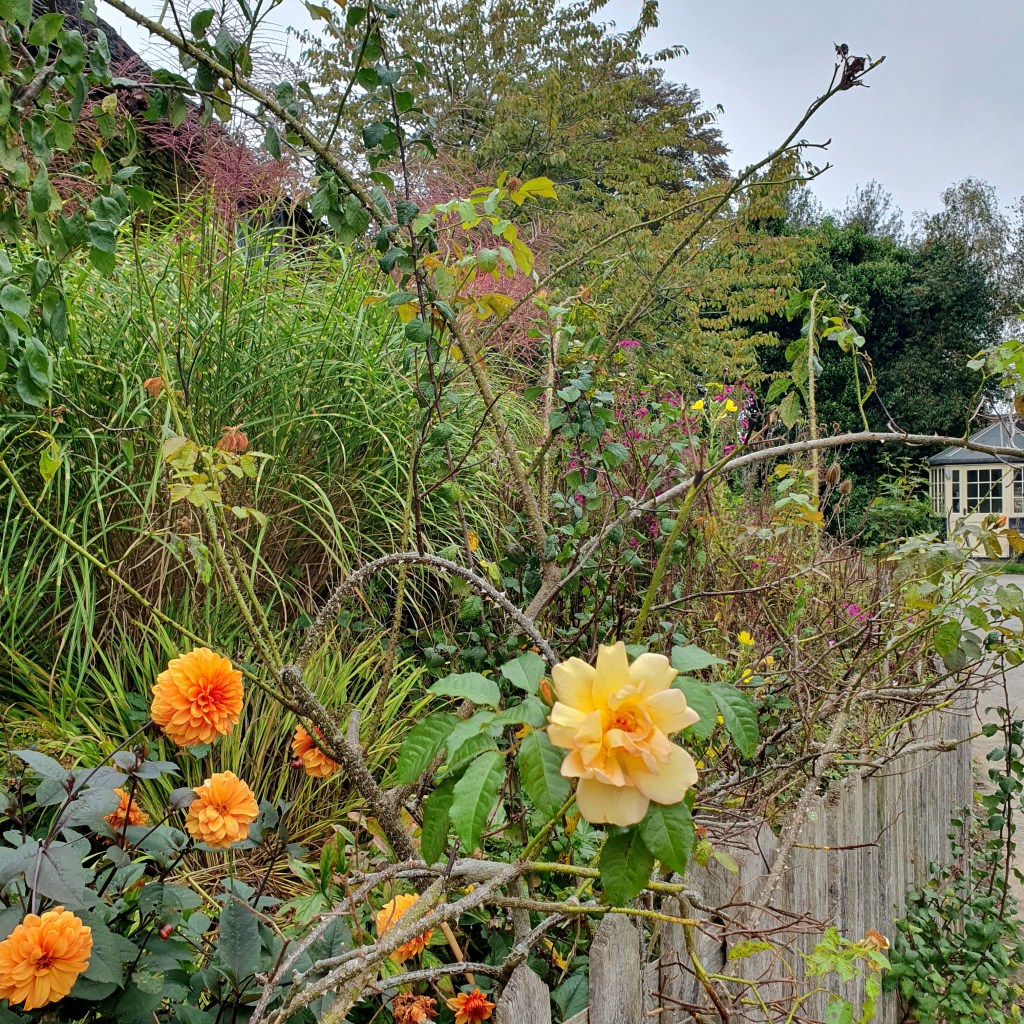
All three, the House, its Garden, and the surrounding landscape, are forming a thoughtfully planned coherent whole that makes it an absolute pleasure to wander about, to discover, and to enjoy.
Standen House and Garden today is one of the National Trust properties I absolutely enjoy visiting when in the UK. For those of you in Europe who don’t know about it: the National Trust is an organisation for heritage conservation in England, Wales and Northern Ireland. It was founded in 1895 and works through charity and membership. An organisation that Austria is absolutely lacking, and the effects of this circumstance are progressing further and further: an increasing loss of architectural and cultural heritage.
Even as a studied landscape planner (that doesn’t work in that field for multiple reasons), I do not know what to do about it for the moment – apart from illustrating children’s books on architecture.
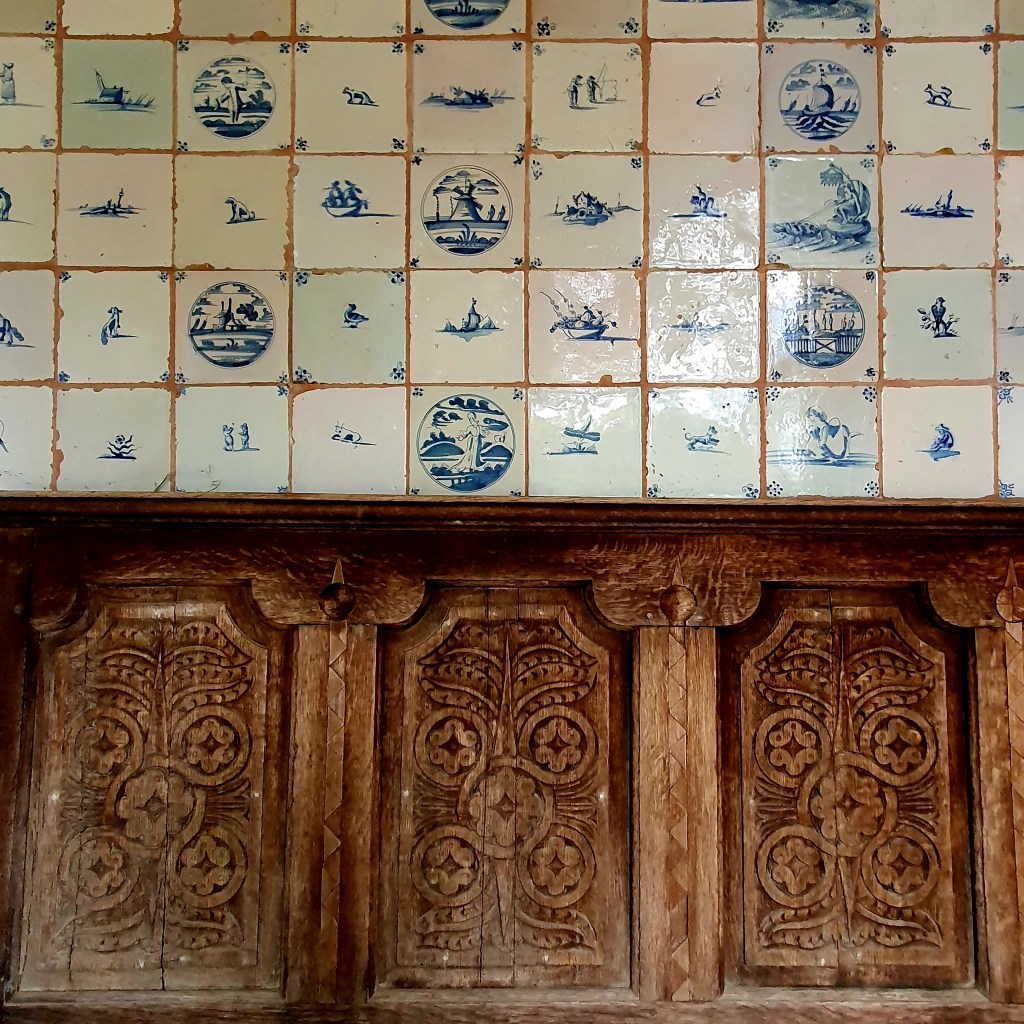
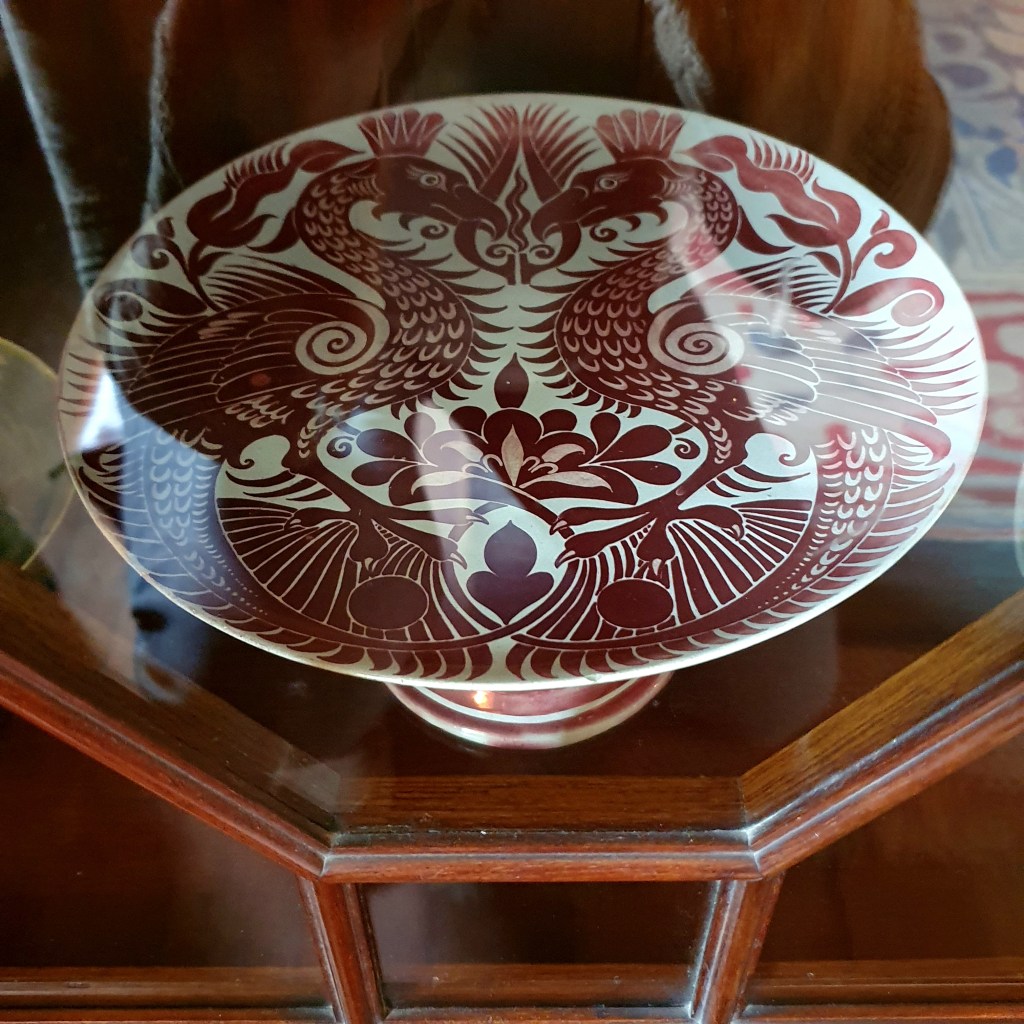
But back to Standen: Everything here was a delight. Not only the architecture, the interior design, the gardens, or the catering of the Barn Café, but also the extremely kind and helpful staff. It was an unforgettable day for me.

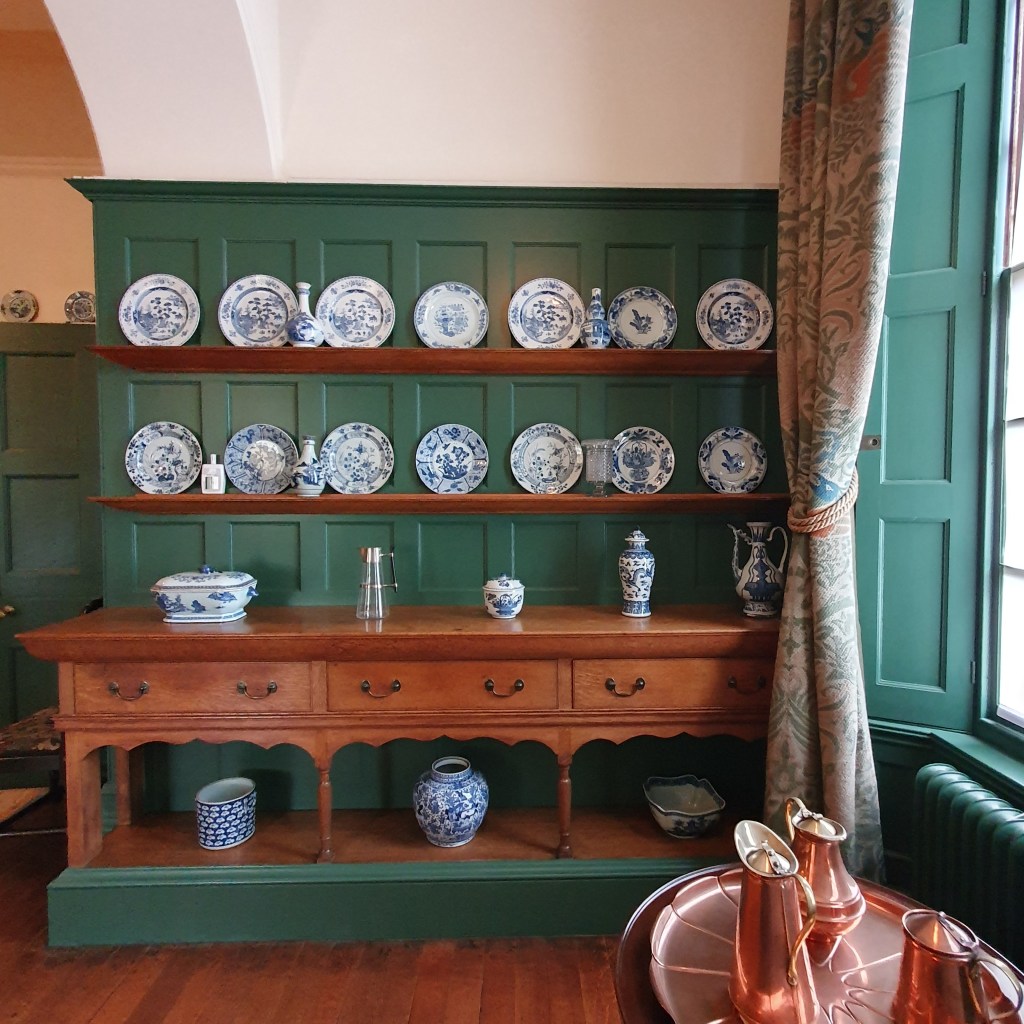
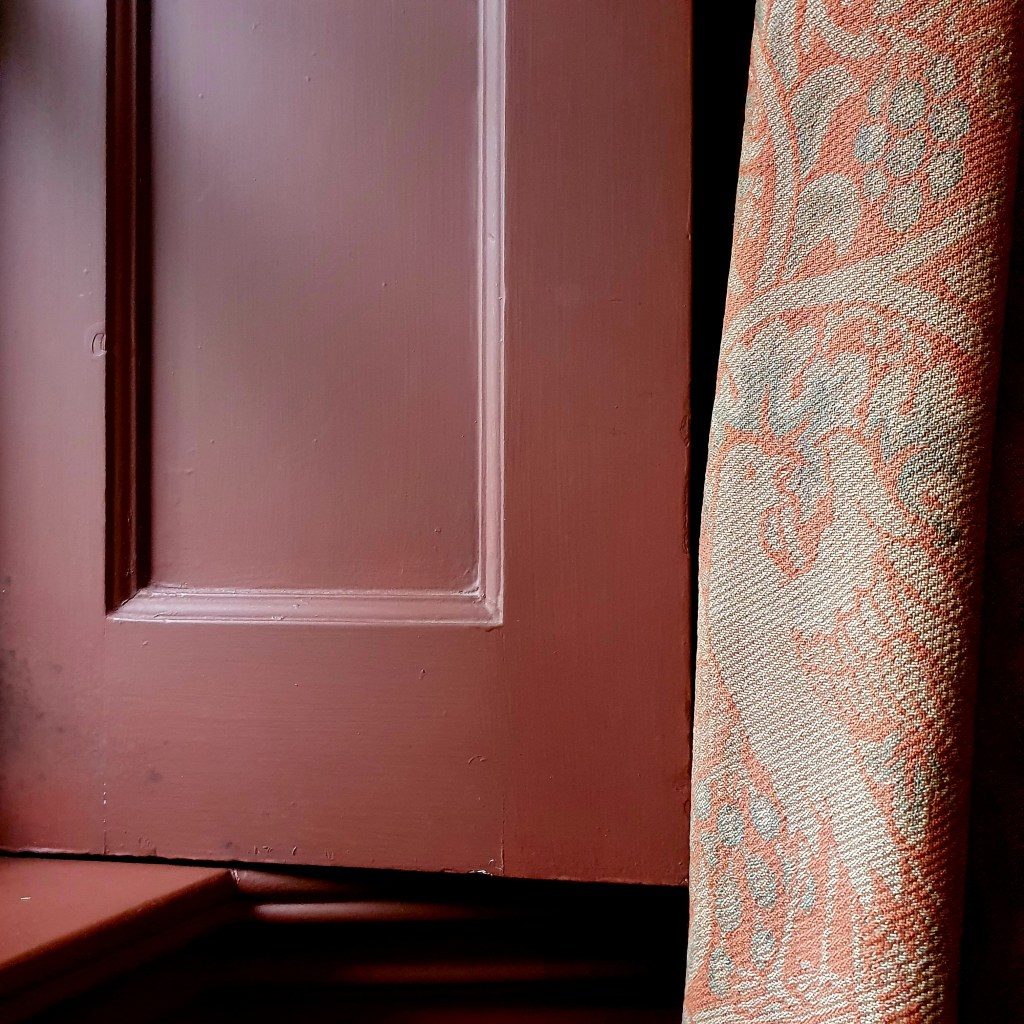
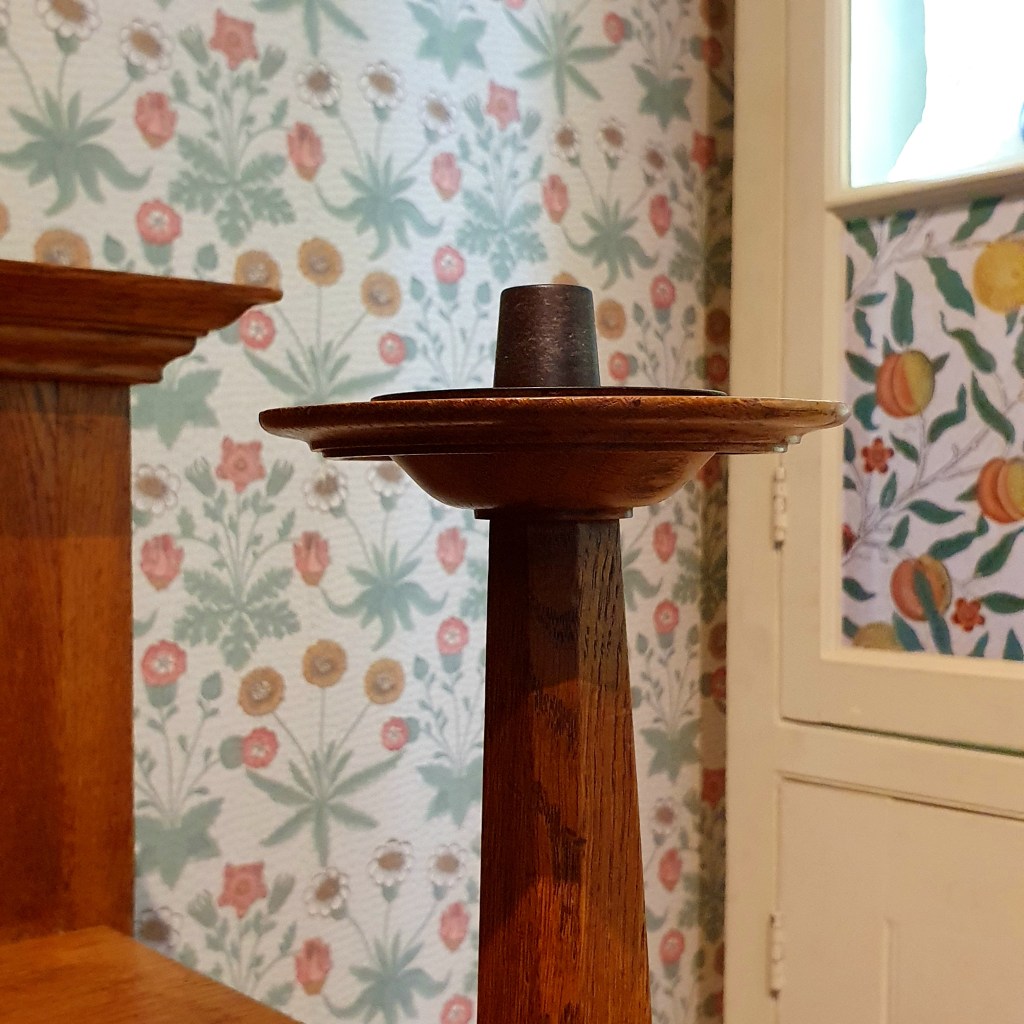
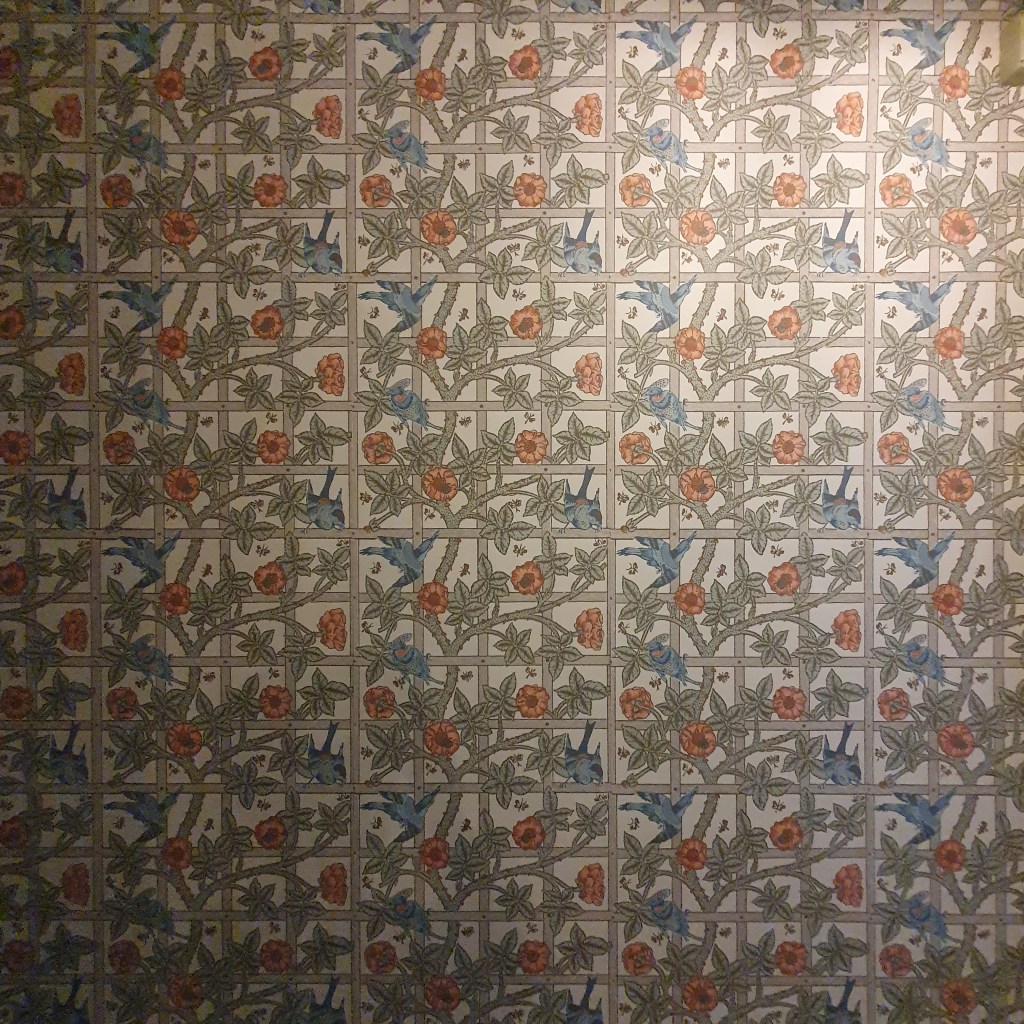
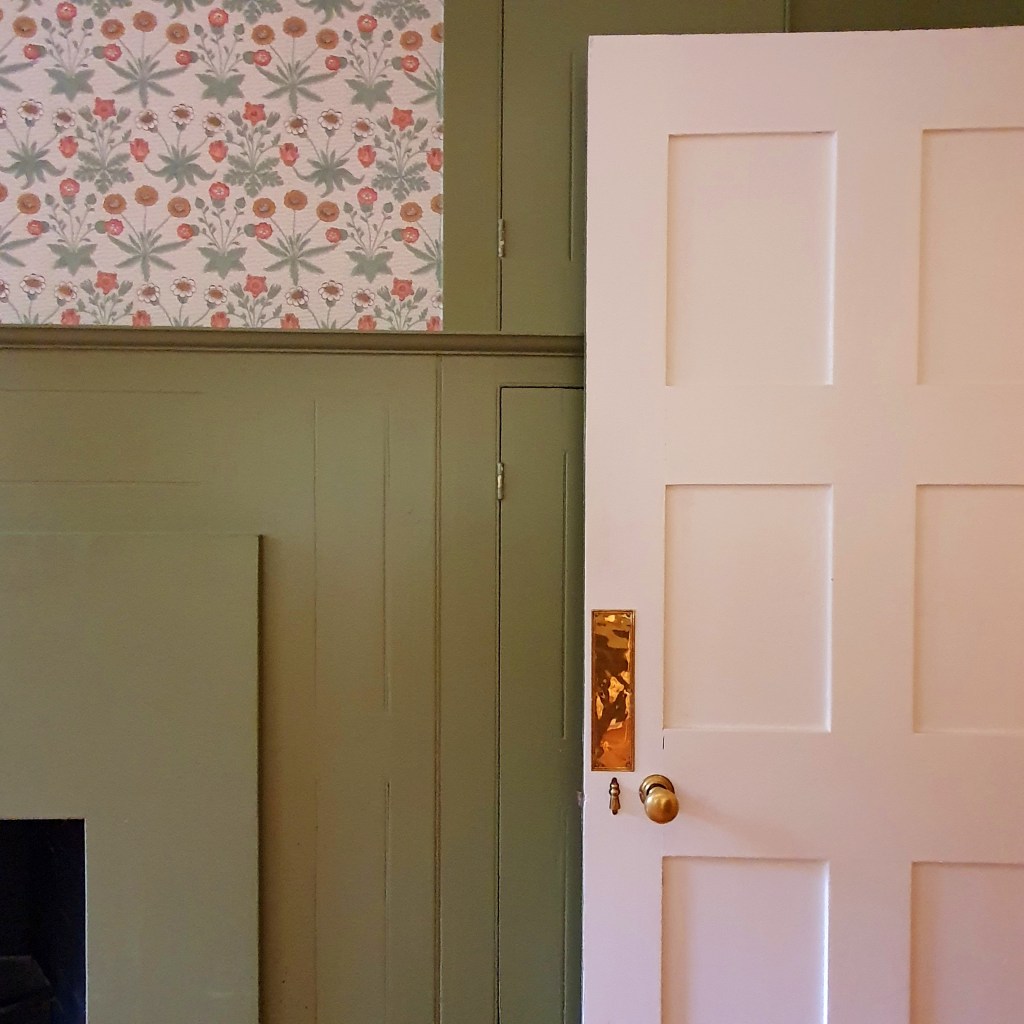
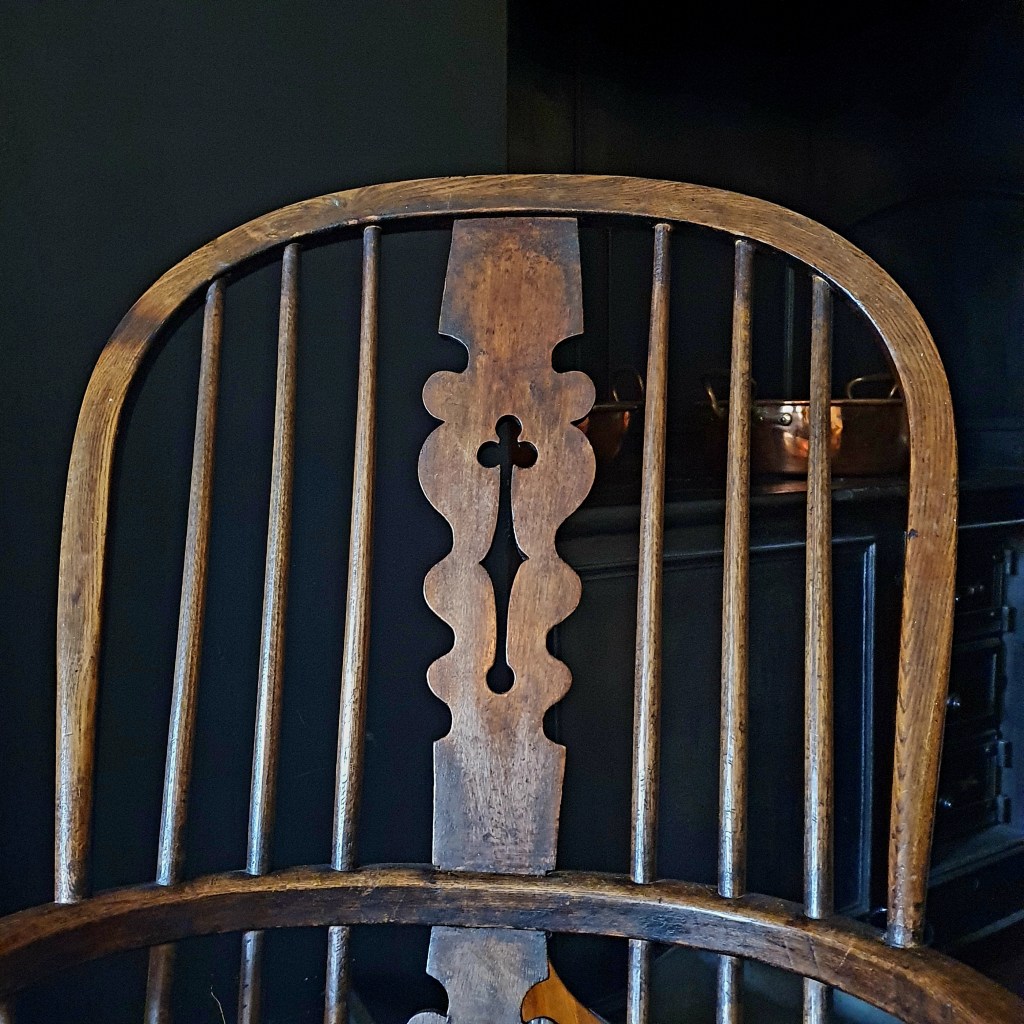
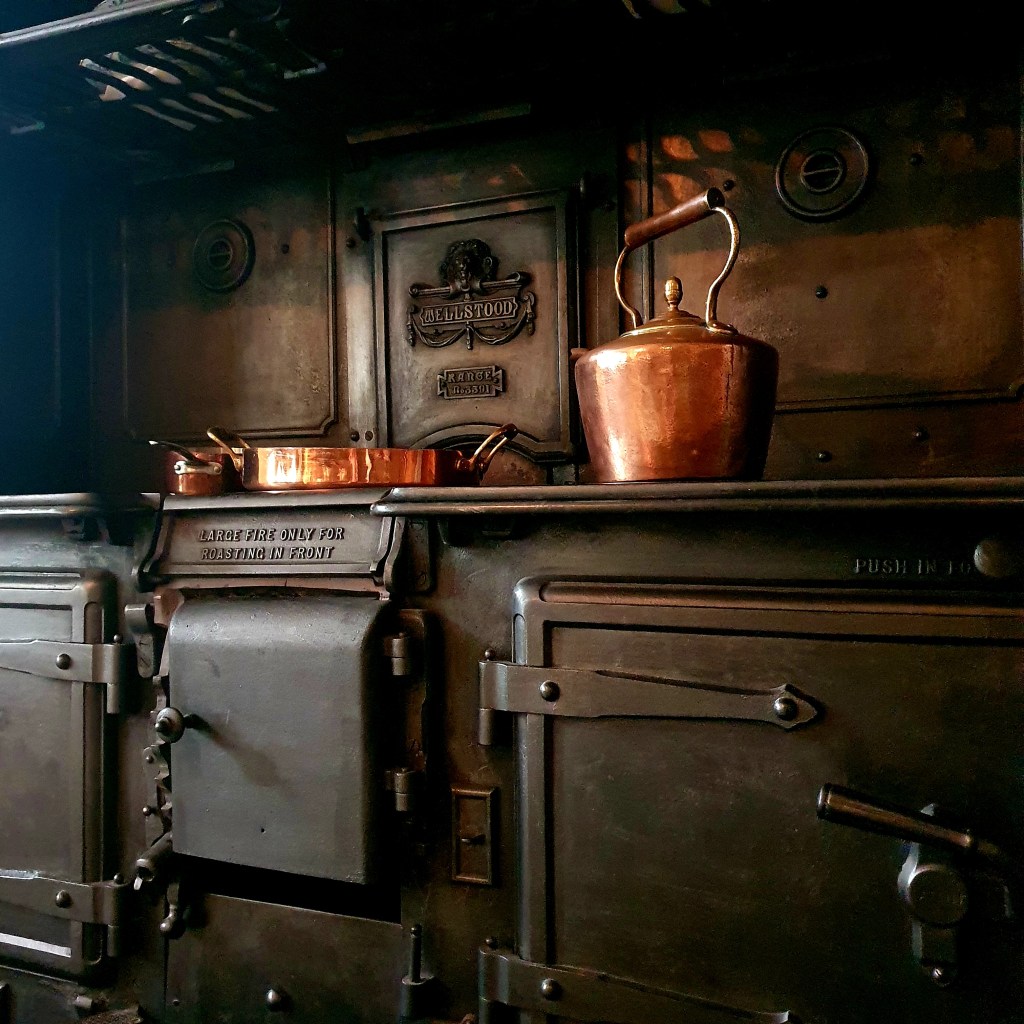
After my visit at Standen House and Garden, I found myself quite inspired and grateful. So I did a small Watercolour Painting of a detail in the Business Room and was then granted the honour of being featured by Standen House for my work on social media. For a self-trained artist that has another full-time employment, and as someone that feels strangely and strongly connected to the Arts and Crafts Movement in many ways, this is an honour indeed! So, Standen and team: for your help with my research on site, an unplanned ride on this incredible ancient country road (I will never forget that either!), and this gesture, I would like to express my heartfelt gratitude.
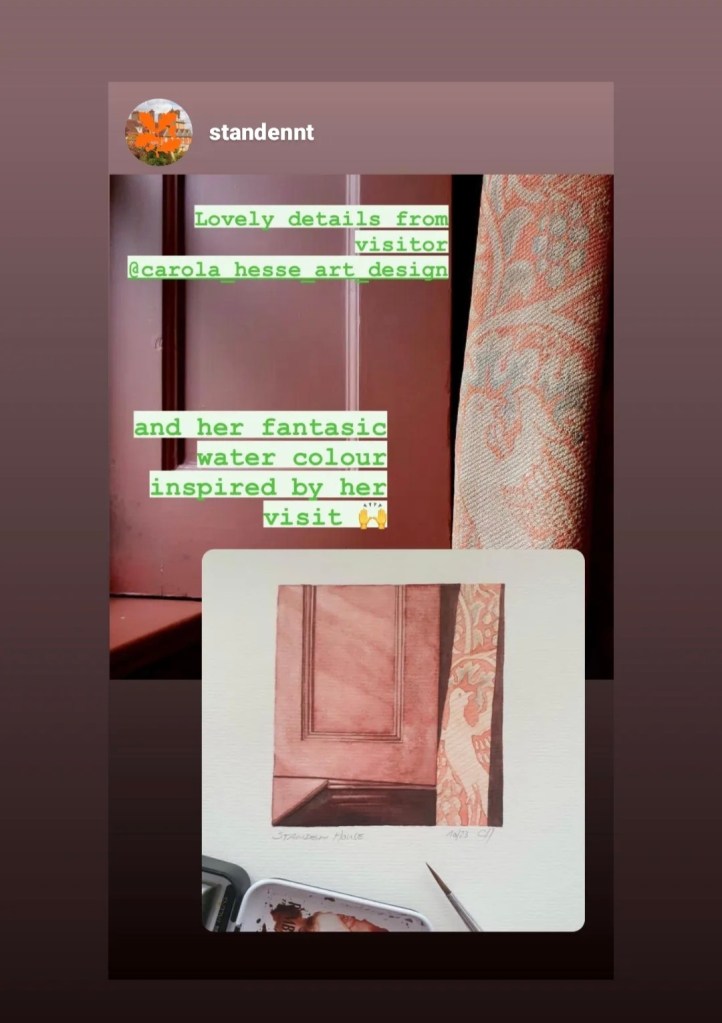
I choose this particular detail for Marian at Standen and its beautifully corresponding elements: on the one hand side, there is the painted wood – a deep, and yet matt red. It’s called Dragon’s Blood. The moulding of the window is being kept simple: straight lines, creating varying shadows and lights throughout the day. And then, just next to it, a thickly woven Morris & Co. curtain fabric in a quite matching colour scheme. Ornamented, but modest. Reminding and connecting you through the pattern on it of and with the outside world – with nature. It is a juxtaposition and strongest, when kept in this rather simple way.
I suggest that it is aspects like this, and the craftsmanship behind it, which are contributing to the timelessness of Arts and Crafts Design.
Carola Hesse, Vienna, October 2023

 Carola Hesse